Startup and shutdown sequencing
Controlled start order, downstream proof, stop delays, cleanout timing, and restart behavior designed around material flow.
PLC / HMI / Sequencing / Safety
Clear operating status, dependable interlocks, controlled startup, clean shutdown, and useful information for the person running the site.
Grain handling automation
Kuhl Electric & Automation, Inc. designs, builds, programs, commissions, and services control systems for grain receiving, drying, storage, transfer, and loadout.
We organize the sequence around material flow. Downstream equipment proves it is ready before upstream equipment starts. Faults stop the right machines. Shutdown logic allows the system to clean out instead of leaving grain trapped in the line.
Control-system capability
New systems and practical retrofits for equipment that needs to operate together, even when it came from different manufacturers.
Controlled start order, downstream proof, stop delays, cleanout timing, and restart behavior designed around material flow.
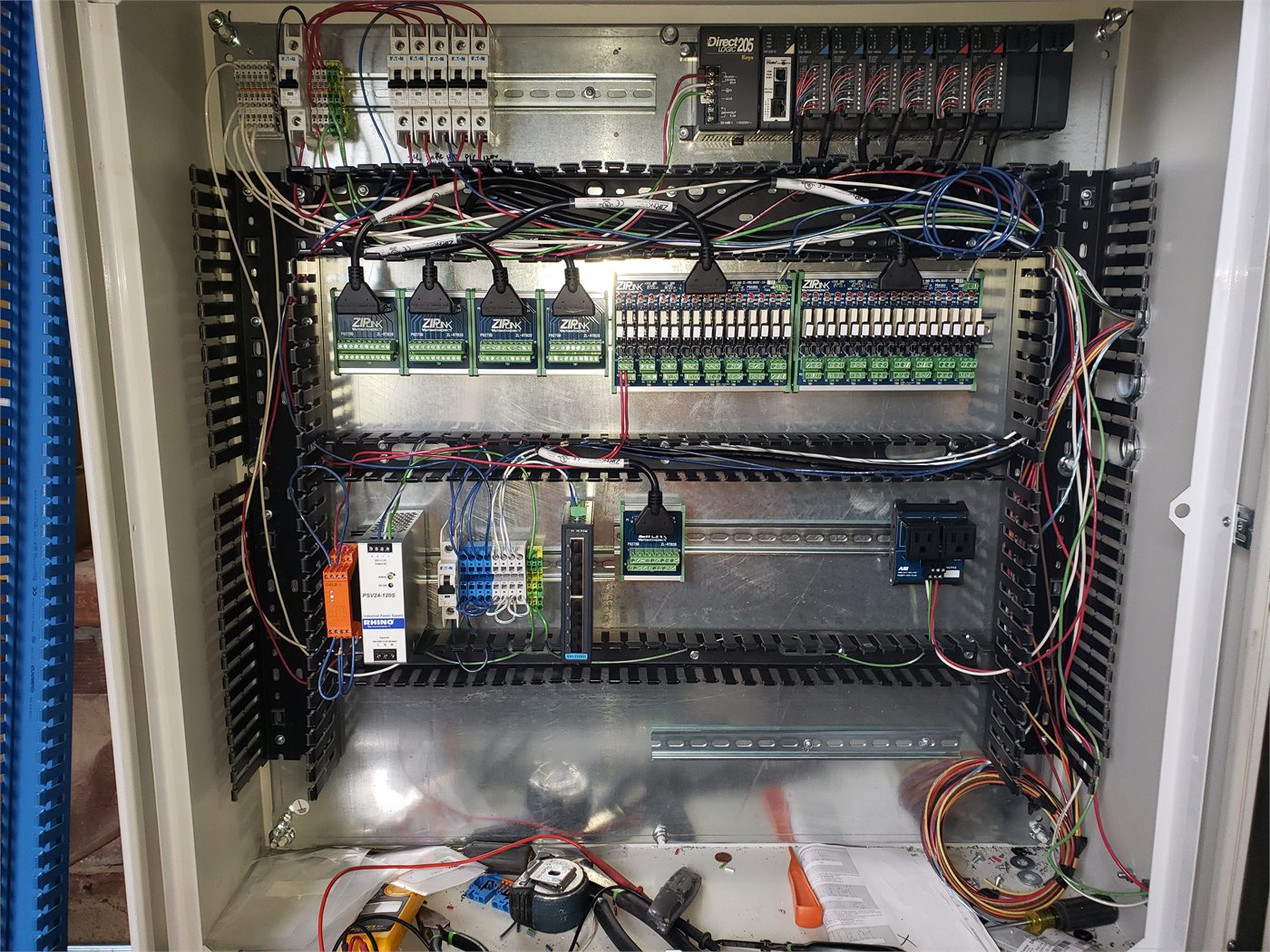
Industrial control panels with organized power, relays, motor interfaces, I/O, network equipment, documentation, and room for service.
Operator screens that show equipment state, alarms, bins, motor loads, permissives, and the reason a machine is not allowed to run.
Safety-rated relays, emergency-stop circuits, feedback monitoring, reset logic, and coordination with machine controls.
Bin level, commodity detection, motion, plug switches, bearing temperature, motor amperage, moisture, and fault annunciation.
Control upgrades, obsolete component replacement, added equipment, sequence changes, intermittent fault diagnosis, and operator support.
One sequence across mixed equipment
We integrate electrical and control functions around dryers, bins, legs, drags, conveyors, sweeps, unloads, and pneumatic systems from manufacturers found throughout the region.
Brand references describe equipment that may be encountered or integrated in the field. Service and parts availability vary and the references do not imply dealer authorization.
Common questions
Often, yes. We first document the equipment, motor control, sensors, safety circuits, operating sequence, and parts that should remain or be replaced.
Yes. Useful displays can show missing permissives, active faults, E-stop status, motor overloads, sensor states, and the sequence step holding the process.
Yes. Commissioning includes rotation and sequence checks, fault testing, sensor verification, operating review, and practical handoff to the people using the system.
Planning a control upgrade?